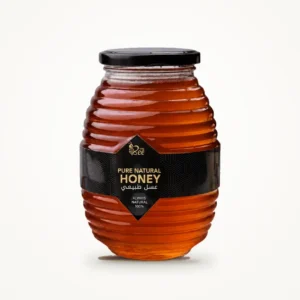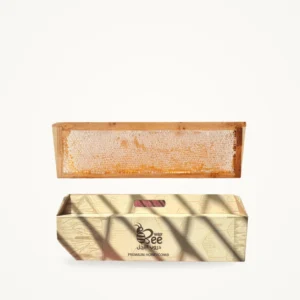
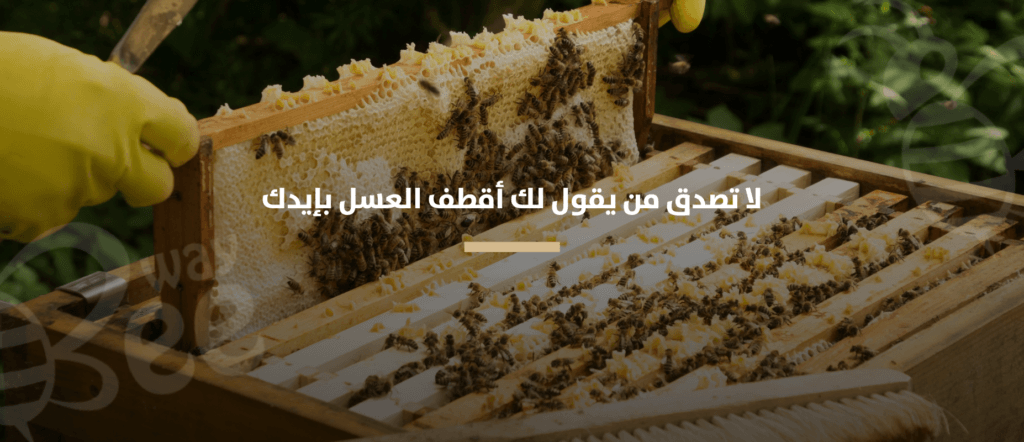
Honey is often promoted with the phrase “pick the honey yourself” as proof that it is natural. But the truth is that harvesting honey with your own hands does not mean it is natural honey. You cannot know the quality of honey, whether it comes from flower nectar or from feeding bees on sugar syrup, except through lab testing, even if you harvested it yourself from the hives or bought it in the comb.
Why doesn’t harvesting honey yourself guarantee it is natural?
Bees can turn sugar syrup into something with exactly the texture of honey, because sugar syrup is very similar in consistency to the nectar bees collect from flowers. The bees process it in the same way in their honey stomach and add enzymes and other compounds to it, so that it is impossible to tell fake honey from natural honey by eye.
So harvesting honey straight from the apiary in front of you is no guarantee to the consumer that the honey is natural.
Learn how honey is adulterated through heating
Can an experienced beekeeper spot fake honey?
Experienced people can judge whether honey is likely to be fake or natural from their knowledge of its characteristics, such as colour and aroma, but they cannot be certain.
Lab testing: the only way to determine honey quality
The laboratory is the only way to determine the quality of honey. Honey produced by feeding bees on sugar syrup has a high level of sucrose (table sugar), above 5%, while sucrose in natural honey does not exceed 5%.
Summary
- Harvesting honey by hand or buying it in the comb does not prove it is natural.
- Bees can turn sugar syrup into something with exactly the texture of honey.
- Experience can suggest, but it cannot confirm.
- A lab test for sucrose is the decider: no more than 5% in natural honey.
This is why every batch of Bee Way honey is sent to an accredited laboratory, and every jar is sealed with a QR code that lets you see the test report yourself. Read about our quality control standards.
Read also: Does crystallized honey mean it is fake?
A Jordanian family business in beekeeping since 1989, offering high-quality beehive products with correct, accurate scientific information. Read our story