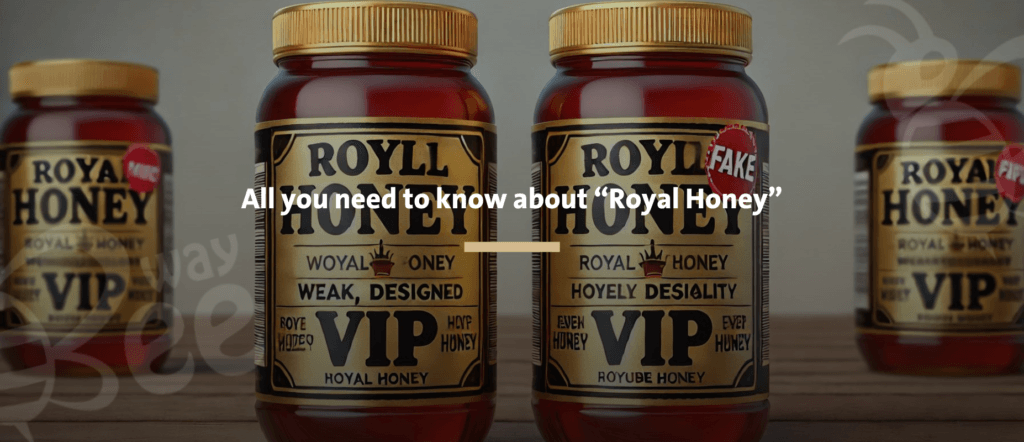
Recently, something called royal honey has been widely marketed to consumers and honey lovers. The truth is that there is no such thing as “royal honey”, and bees do not produce it. In this article we explain the difference between honey and royal jelly, and why “royal honey” is only a marketing term.
What is honey?
Honey is the liquid that bees bring out of their honey stomach after collecting nectar from different flowers. It is made up of sugars such as sucrose, fructose and glucose, plus water and pollen.
It is only called honey after it leaves the bee’s body and is placed in the hexagonal cells, where the bees fan their wings over this liquid, called “nectar”, until the water evaporates and it becomes honey.

Ripe honey in the hexagonal cells after the water has evaporated
What is royal jelly?
Royal jelly is the best-known and most expensive bee product, because it is difficult and costly to produce: it is made by special glands inside the bee’s body and is not collected from any outside source.
A worker bee is fed royal jelly for only 3 days as a larva, while the queen is fed on it alone for her whole life, mouth to mouth by the bees.


Photos from royal jelly production
Why is “royal honey” only a marketing term?
Now that we know what honey is and what royal jelly is, it is clear that bees do not produce anything called “royal honey”. The seller mixes honey with royal jelly and calls it “royal honey”.
The name “royal honey” is wrong because honey is named after the flowers the bees collected nectar from. Citrus honey is called that because it comes from the nectar of lemon, orange and pomelo blossom, sidr honey from the blossom of the sidr tree, and mountain honey is called “herbal honey” because it comes from the nectar of countless flowers.
Be careful when buying so-called “royal honey”
At Bee Way we give you the science, away from the misconceptions common in the honey market. Royal honey is subject to a great deal of fraud, including:
- Poor-quality royal jelly: some sellers use dried royal jelly or very low-quality royal jelly imported from China and mix it with some type of honey.
- Added drugs and chemicals: some dissolve stimulant drugs and chemicals in honey and sell it as an energy booster. This is why some people notice that so-called “royal honey” has an instant effect.
- Additives from outside the hive: such as ginseng, black seed and other herbs, with no scientific study of the amounts added or whether they are suitable. Adding these is a violation under the Jordan Food and Drug Administration.
How do I get honey with royal jelly?
A beekeeper sells honey on its own and royal jelly on its own, and then the customer mixes them, or the beekeeper mixes them openly. It helps to know that, at the time of writing, the average price of a kilo of honey in Jordan is between 18 and 30 JOD, and the average price of one gram of royal jelly is between 2.5 and 3 JOD.
If you want to mix royal jelly with honey yourself, the royal jelly must reach you frozen, because it is stored below 0°C, and about 5–15 grams are mixed into every 500 grams of honey.
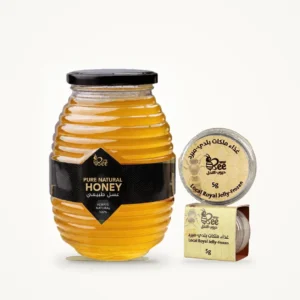
You can also choose citrus honey with local royal jelly, which we mix for you with the amount stated on the jar.
Summary
- Bees do not produce “royal honey”; it is a marketing name for honey mixed with royal jelly.
- Honey is named after the flowers the nectar was collected from.
- “Royal honey” is often adulterated with poor royal jelly, chemicals or unstudied herbs.
- It is best to buy honey and royal jelly separately, or mixed with a stated amount.
A Jordanian family business in beekeeping since 1989, offering high-quality beehive products with correct, accurate scientific information. Read our story