Manuka honey has recently become very famous in the global honey market, and in the Arab market in particular, and it sells for very high prices. Because consumers have a right to accurate information, we at Bee Way offer a scientific and objective explanation of the difference between manuka honey and Jordanian local honey.
What is manuka honey, and when is honey called “manuka”?
Manuka honey is produced in countries such as Australia and New Zealand from the flowers of the manuka shrub (tea tree), which grows there in abundance thanks to the suitable climate and its long history in the region. Jordanian local honey, in all its types, is produced from the different nectar flowers of the Jordanian environment, according to the flowering season.
It is important to know that honey is named as a particular type (manuka, citrus, sidr…) when the nectar from that flower exceeds 45%. If manuka nectar exceeds 45%, the honey is called “manuka honey” even though it contains other nectar sources. If no flower passes this share, the honey is called “multifloral”, known in Jordan as mountain honey.

Why is manuka honey famous? (MGO)
Manuka honey owes its fame to MGO (methylglyoxal), which is considered a natural antibacterial compound. Many studies have been carried out on it in New Zealand and Australia, and some of its medical uses were licensed in Britain in 2004 for dressing and disinfecting wounds with medical creams containing manuka honey.
Is MGO found in Jordanian honey?
This question was answered by Dr Amal Al-Abbadi, Professor of Entomology at Al-Balqa Applied University, who ran lab tests on Jordanian honey to detect MGO and compared it with batches of manuka honey she imported from their original sources specifically for these tests. The results showed that:
- Most types of Jordanian honey contain MGO, whether citrus, eucalyptus, thistle, herbal or others.
- Jordanian honeys also contain other chemical compounds that are effective in supporting the immune system and resisting bacteria and fungi, thanks to the variety of Jordan’s plant cover and its long medicinal history.
- Ironically, some of the imported manuka samples contained MGO that had been added after production, not from flower nectar. This does not mean all manuka honey is like that.
However, Jordanian plants lack sufficient studies, unlike manuka honey, which has received wide scientific and research attention in Australia and New Zealand.
Manuka honey: what is produced worldwide versus what is on the shelves
A study commissioned by the British newspaper The Sunday Times from a scientific testing company revealed that many premium honeys sold at more than five times the price of ordinary honey are not what they are said to be, and that much of the honey labelled “manuka honey” in well-known shops does not contain the ingredients that distinguish this type. According to what was published, New Zealand produces no more than 1,700 tonnes of manuka honey a year, while more than 10,000 tonnes of it are sold around the world every year.
This is similar to what has been published about the adulteration of sidr honey, driven by its commercial fame, high demand and high price. We have our own experience at Bee Way: a company in China contacted us and offered to sell us “sidr honey” with a near-real flavour, manufactured in China, for us to sell in Jordan. Sadly, this is widespread.

Is manuka honey the best in the world?
By the international standards of the world’s best honey competition held in Canada in 2019, the prize went to a Saudi Arabian honey from the “Al-Nahl Al-Jawwal” establishment of the veteran beekeeper Fayez Al-Qathami. It did not go to New Zealand or Australian manuka honey, even though therapeutic properties are among the competition’s most important criteria.
Healing from your own environment
Many specialists believe that people benefit more from the products of the environment they live in than from those of a different environment. Egyptian honey made from Egypt’s flowers and bees, for example, may be more beneficial to an Egyptian than Jordanian honey, and so on.
Summary
- Honey is called “manuka” when manuka nectar exceeds 45% of it.
- Manuka’s fame comes from MGO, and this compound has also been found in most types of Jordanian honey.
- Far more manuka honey is sold worldwide than is actually produced, so beware of fraud.
- Lab-tested local honey is no lower in quality than imported honey, and sometimes better.
In the end, this is our own effort at analysis and reporting, in which we may be right or wrong. Its aim is to strengthen consumer confidence in the national product, specifically local honey, which is no lower in quality than imported honey. We urge research centres to support studies on local honey to take it to advanced levels.
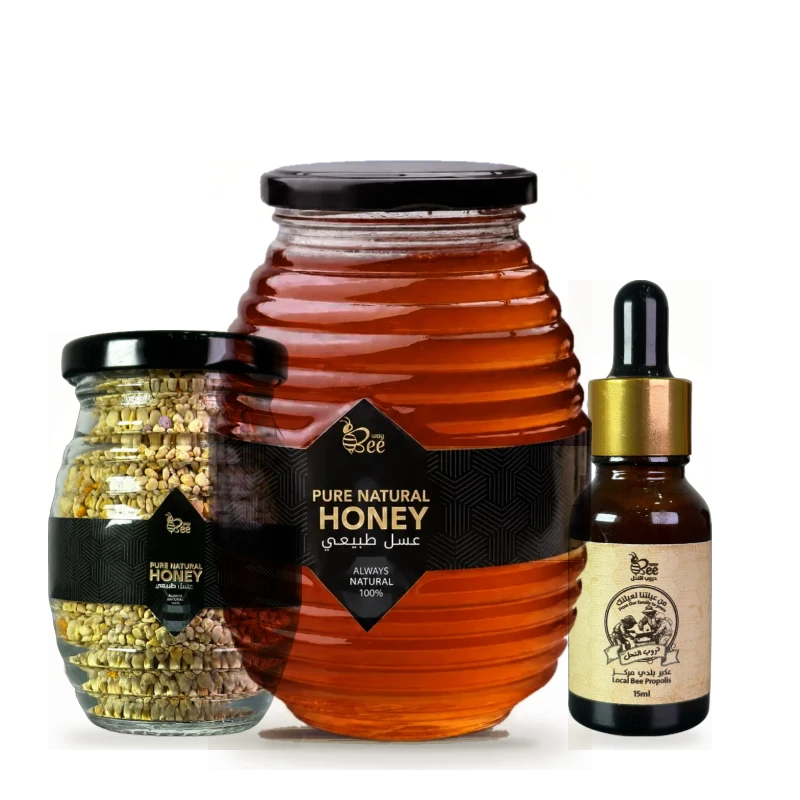
Shop lab-tested local honey from Bee Way
A Jordanian family business in beekeeping since 1989, offering high-quality beehive products with correct, accurate scientific information. Read our story